Fall '25
2D + 3D Graphics Rendering
An exploration of creating 3D graphics, featuring a black hole simulation + more!
About The Project
This project explored 2D and 3D graphics rendering using OpenGL, GLEW, GLFW, and GLM. The team worked through the fundamentals — window creation, error checking, vertex arrays, indices, and shaders - then put it all together in a black hole simulation.
Learning Progression
The team built up their knowledge step by step. They started with OpenGL basics: GLFW for creating windows and handling inputs, GLEW for accessing modern OpenGL features without manually managing function pointers, and GLM for vector and matrix math. From there, they moved through window creation, error checking, and window pointer definitions before tackling the actual rendering.
Black Hole Simulation
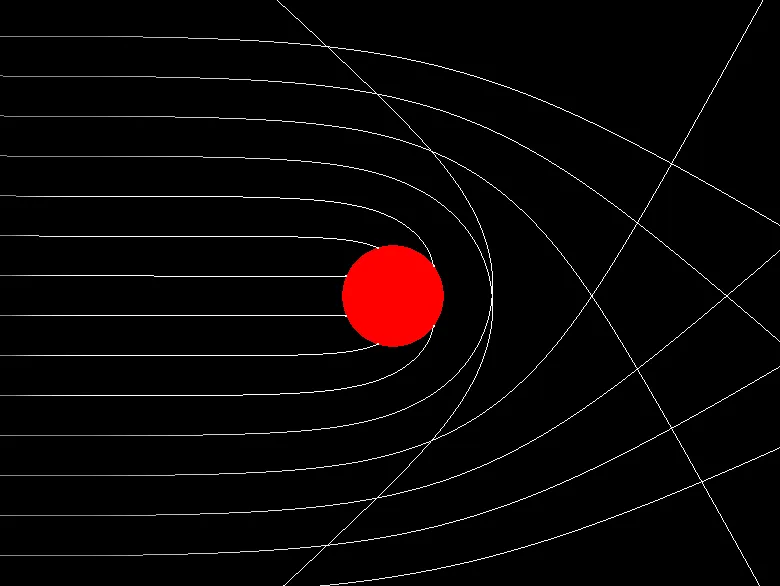
The black hole is constructed using OpenGL triangles. Its constructor calculates the Schwarzschild radius based on the black hole’s mass, which determines the event horizon - the point where light can no longer escape. Light rays are rendered as points with fading trails connected by GL Line Strips, and their paths are computed using geodesic equations.
The team implemented both Euler’s method and RK4 (Runge-Kutta 4th order) step functions to simulate how light curves around the black hole. Polar coordinates are converted back to cartesian for rendering. The final product shows both single and multiple light rays bending around the event horizon.
Shaders and 3D Objects
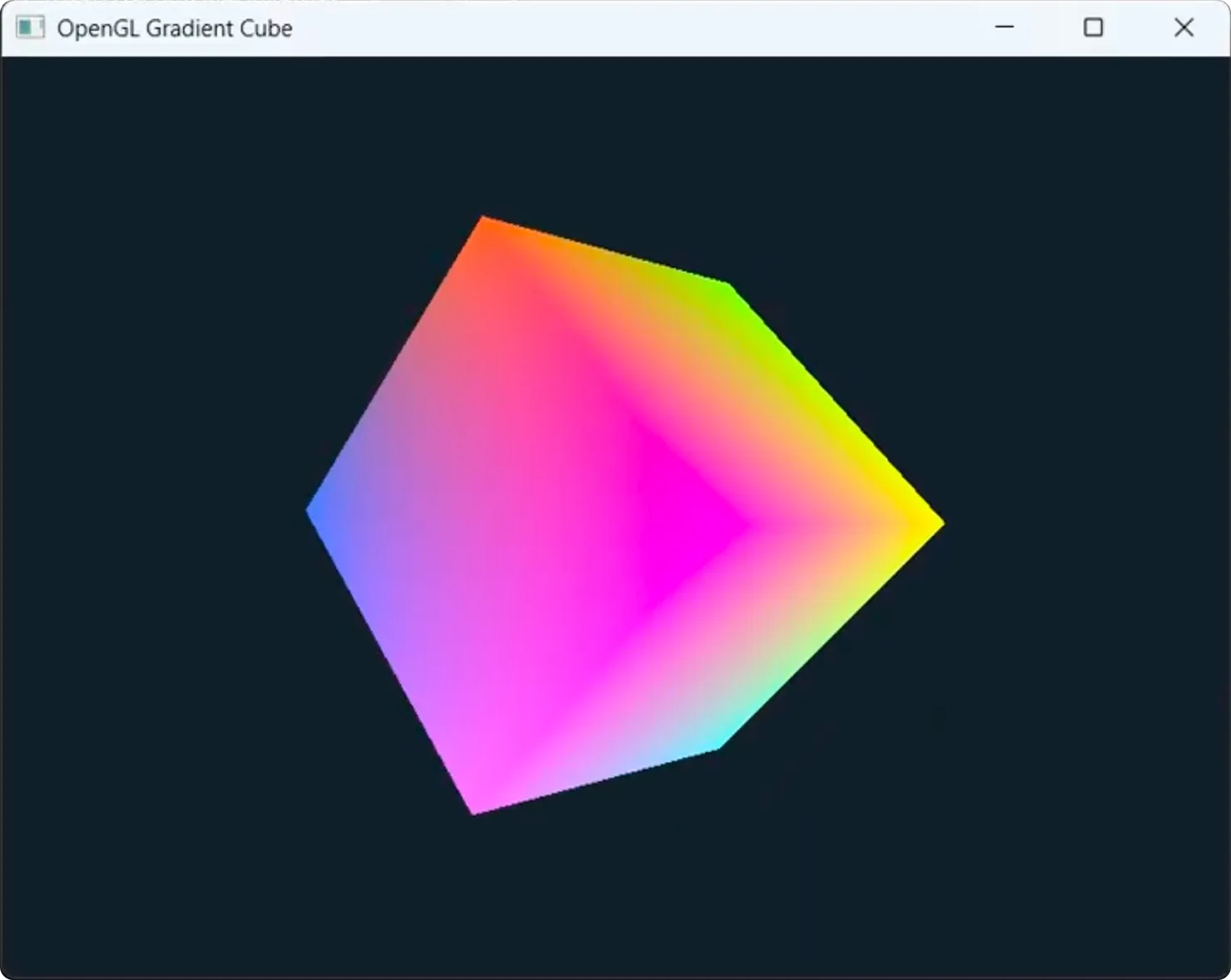
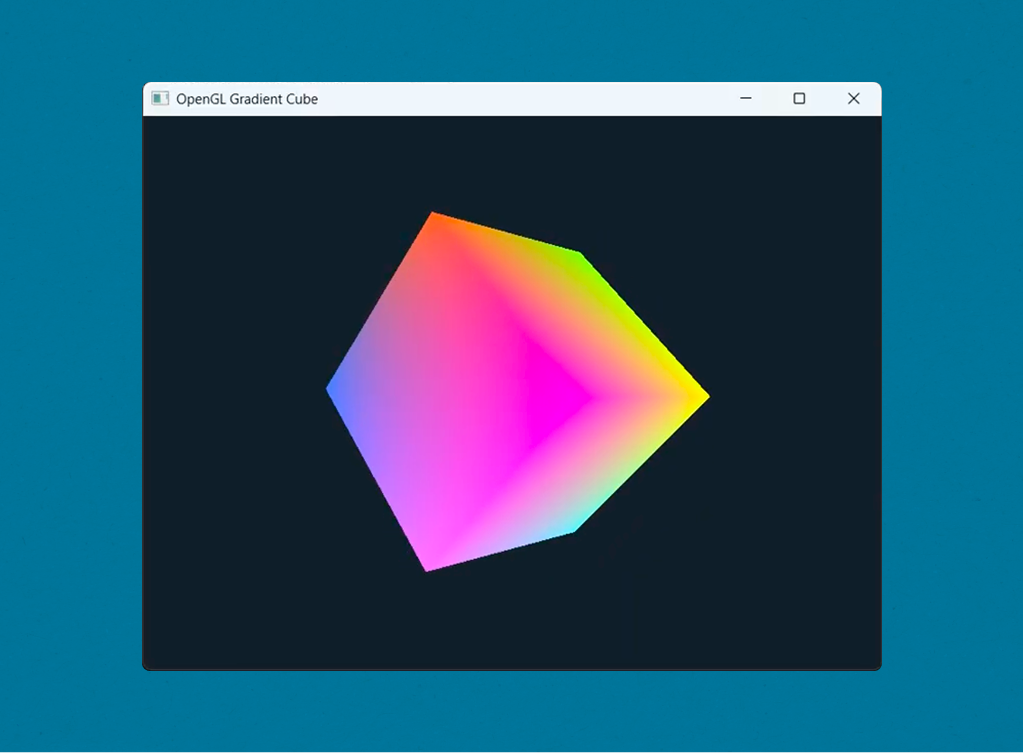
Beyond the simulation, the team also built 2D and 3D shader objects using vertex and indices arrays. The vertex array defines the object being drawn - each vertex contains 3D coordinates and a color attribute. The indices array specifies the order vertices should be processed to form triangles on screen.